by PRIDE Reading Program Admin | Mar 15, 2018 | A PRIDE Post, Articles & Resources, PRIDE Reading Program
IEP Attendees – Who Must Attend, and Who is Permitted?
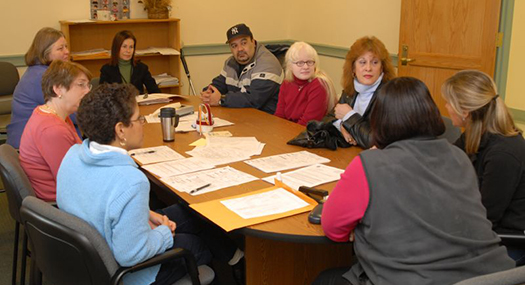
As we approach end-of-school-year IEP season, I always receive questions regarding who should attend IEP meetings. This year, especially, I have heard from an increased number of parents asking whether the proposed list of IEP attendees is appropriate. Below is a guide with information regarding which IEP team members are mandatory, and which team members are permitted to attend, but are not necessarily required to participate.
Mandatory IEP Participants:
- At least 1 general education teacher, if the student is or may participate in the general education setting;
- At least 1 special education teacher/provider;
- A representative of the public agency (school district/LEA) who is qualified to provide, or supervise the provision of, specially designed instruction to meet the unique needs of children with disabilities; is knowledgeable about the general education curriculum; and is knowledgeable about the availability of resources of the public agency;
- At least one person who is able to interpret the results of any evaluations being reviewed (when appropriate/necessary);
- The Parents (or education rights holder); and
- The Student, if the Student has turned 18 and holds his/her educational rights.
Permissible IEP Participants:
- Additional teachers and service providers, if available and permitted by the LEA;
- Any other individuals who have special knowledge regarding the student, including service professionals;
- The student may attend, when appropriate; and
- An attorney and/or advocate.
When is Attendance Not Necessary:
A mandatory team member is not required to attend the IEP meeting if the Parent and Public Agency consent, and that member’s area of service is not being modified or discussed at the IEP meeting.
Excusing Members:
A mandatory team member may be excused, even when the meeting involves discussing the member’s area of curriculum and services, if the Parents and Public Agency both consent, and the member submits prior written input regarding the development of the IEP.
Should You Give Notice of Additional Participants?
You do not need to give notice if you plan to bring additional participants to the IEP meeting, but doing so is generally advised. This will ensure that adequate seating is made available. Additionally, if you intend to bring an attorney to the IEP meeting, the Public Agency has a right to bring an attorney, as well. To avoid a meeting being cancelled due to a lack of notice, it is generally advised to notify the Public Agency if you intend to bring legal representation. The District is also not prohibited from having an attorney at IEP meetings when a Parent does not obtain counsel.
Key Take-Aways:
- The school team can choose which teacher(s) will be available for the IEP meeting. If you have a specific teacher that you feel should participate in the meeting, you should make this request in advance. There is no guarantee, but it is appropriate to ask, and explain why this provider’s input is most valuable. You can also request written updates from any teachers who cannot attend.
- The Public Agency representative is often the school principal, but will sometimes be a director of special education, or program specialist. If you aren’t sure, just ask.
- You hold the right to excuse mandatory team members for all or part of the meeting. The Public Agency needs to make all mandatory team members available for an IEP meeting within the statutory timelines.
Thank you Jazmine Gelfand for being our guest blogger for this week!
Jazmine Gelfand is a special education attorney who offers education and disability legal representation to the greater San Diego community. She is dedicated to zealously representing children with disabilities and their families, through a collaborative and results-oriented approach. Visit her website at www.specialedlegalcare.com or email her at Jazmine@SpecialEdLegalCare.com

by PRIDE Reading Program Admin | Oct 24, 2017 | A PRIDE Post, Articles & Resources
As a very special October treat, we have guest blogger Emily Gibbons from the Literacy Nest to share some really helpful and practical tips teaching long and difficult words to struggling readers. THANK YOU Emily, for writing such a great post for our PRIDE readers!
How do you help your students read and spell multisyllabic words effectively?
We all know how critical it is to learn how to read and spell strategically for better accuracy, fluency, vocabulary development and overall comprehension. Providing effective strategies for reading and spelling multisyllabic words gives students the foundation they need to become successful readers.
One reason many students get hung up on reading is that they get stumped on longer or harder words they can’t understand. Teaching them a process for working through multisyllabic words instead of offering ineffective techniques like guessing or looking at a picture, will empower them to read through text with ease.
Here are some tips for reading multisyllabic words effectively if they find themselves stuck. You will want to have some post-its, or access to a small white board.
- Have them locate and see if they can identify the vowel graphemes in the word by underlining them. (Vowel teams are one sound).
- Box any familiar suffixes.
- Circle familiar prefixes.
- Use knowledge of syllables to decode the vowel sounds.
- Say the whole word and see if it makes sense.
- Use a pencil to scoop under each syllable, blending left to right.
- Check the context for clarification. Does it make sense?
Practice these steps with your students. It will help them when they need to do it on their own. Again, you’re creating a foundation for a love of reading that they will use now and in the future. You’re showing them how to solve difficult problems and how to get past something that stumps them, such as a long, multisyllabic word they may not be familiar with.
Some of the most important things you will teach your students are how to read and how to spell. Getting familiar and comfortable with reading, spelling, and language are very important skills that students take with them for the rest of their lives. It can be intimidating, however, especially at first and when faced with big words that are new to them.
The biggest hurdle for children who struggle with reading is taking their decoding knowledge and applying into encoding, or spelling knowledge. This can take a while to develop. Implementing a multisensory approach which includes opportunities for seeing, hearing, spelling, writing and even touching multisyllabic words simultaneously helps to build those new neural pathways that struggling readers need to become strategic and efficient readers and spellers.
When teaching your students to spell longer words effectively, here are some tips:
- Repeat the word and give it in a sentence
- Make a line for each spoken syllable
- Pronounce each syllable one by one
- Segment the sounds in each syllable and write each one
- Check for sounds and rules
- Reread
Go over these steps with your student. Show them examples out loud with a couple of different words so that they can get very familiar with the process. This is what is going to help them when they are alone, facing a word they don’t know how to spell. When they are taking a test, or writing for a grade, they need to be able to fall back on the steps without guidance, to figure it out for themselves.
This goes a step beyond just memorizing how to spell certain words and also teaching problem solving skills when it comes to figuring out how to spell other words in the future. Where there is a problem, there is a solution to fix it. You’re teaching the formula they will take with them for the rest of their lives.
Thank you so much Emily for writing this wonderful post today for our readers. If you are interested in purchasing an Orton-Gillingham curriculum that is heavily scripted, super duper easy to use and highly affordable, check out The PRIDE Reading Program here.
Thank you for stopping by today and reading my Post.

About Emily
Emily Gibbons, M.Ed. is an International Dyslexia Association, certified dyslexia practitioner. She was trained in the Orton-Gillingham approach through an International Multisensory Structured Language Education Council, accredited program as well as Project Read. Emily was an inclusion classroom teacher for over thirteen years before starting The Literacy Nest, LLC. She is a mom of four children and lives in MA. Visit the Literacy Nest here.
by PRIDE Reading Program Admin | Oct 16, 2017 | Articles & Resources
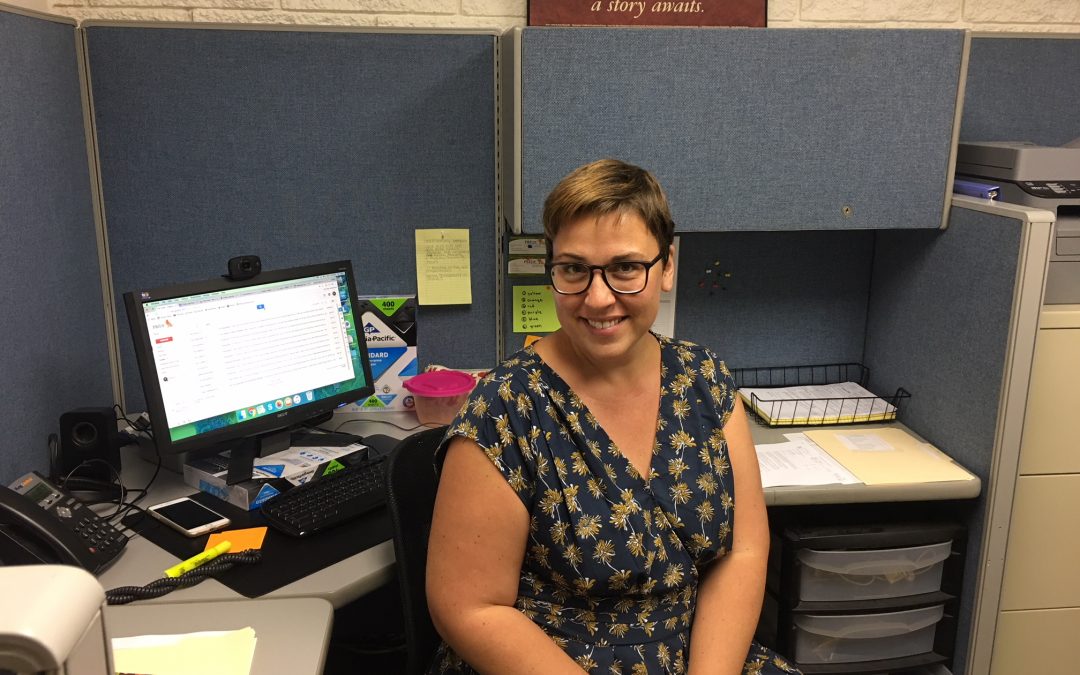
PRIDE Learning Center is growing and we are pleased to announce the newest addition to our team. Meet Patricia Liemke, our new Human Resources Director! Patricia comes to us with a depth of Human Resources knowledge and experience that we here at PRIDE feel lends itself to our continued growth and improvement as a company.
Prior to joining us at PRIDE Learning Center, Patricia worked as an Human Resources Director at Redseven Entertainment for the last four years. Her job responsibilities with Redseven included recruiting, hiring and onboarding actors and television celebrities.
Patricia will guide and manage the overall provisions of the Human Resources Director services here at PRIDE Learning Center, including policies, and training programs for our company as well as recruiting, staffing, employee onboarding, development and needs assessment. Patricia will also provide an employee-oriented and high-performance culture here at PRIDE Learning Center that emphasizes quality, empowerment, academic standards, goal attainment and the ongoing development of a superior instructional staff.
Please join us in welcoming Patricia to the PRIDE team!

by PRIDE Reading Program Admin | Apr 17, 2017 | Articles & Resources
Summer is fast approaching and PRIDE Learning Center will be offering some exceptional summer reading camps throughout Southern California.
This is the perfect time for struggling students to get caught up in important reading, writing and comprehension skills. During the summer months, students are not overwhelmed by the demands of schoolwork, homework and other extracurricular activities that fill their schedules during the busy school year.
We understand that kids need to have fun too, and that summer is also a time for relaxing and playing. At PRIDE Learning Center we try to balance each of our student’s needs by only having a morning summer reading camp from 9:00 – 12:00 Monday – Friday for 4-6 weeks from June 26th – August 4th. Thus afternoons and weekends can still be filled with fun recreational camps, activities or family time.
The teachers at our summer reading camps are credentialed reading specialists that are trained in our Orton-Gillingham, one-on-one, multisensory reading program. Students who are currently struggling with reading, writing and comprehension can use these 4-6 weeks of summer instruction to catch up and get ahead.
We currently have summer reading camps in these locations:
- Calabasas
- Sherman Oaks
- Pasadena
- Beverly Hills
- Redondo Beach
- Yorba Linda
- Irvine
- Mission Viejo
- Temecula
- Carlsbad
- San Diego
Hurry and Save Big!
Our summer reading camp early registration is currently open until May 19th. Enroll now and save 5% off the total tuition!
Visit our website at www.pridelearningcenter.com to register online or call us today at 866-774-3342!

by PRIDE Reading Program Admin | Feb 6, 2017 | A PRIDE Post, Articles & Resources
Parents teach their children lessons every day. Parents of children with special needs often feel like there are even more lessons that their children need to learn because they face special challenges. These parents sometimes feel overwhelmed and unsure of where to begin teaching their children, which makes it difficult to choose an education path for them. Any lesson that is suited to a child’s ability and engages him is appropriate for a parent to teach, and we share a few of our favorites here.
- The Importance of Organization
Organizational skills are important for kids with special needs not only because they need to be able to access their belongings but because they need to keep orderly thoughts so they can retrieve their knowledge and use it effectively. Children who lack organizational skills struggle when it comes to handling information logically and effectively; the result is they face challenges when they have to set priorities, make plans, and see a task through to completion.
Parents can help kids build organizational skills in several ways. For example, creating a family calendar where parents and children keep track of tasks and plans is one way to teach the importance of having a schedule and meeting deadlines. Assigning chores that involve sorting and categorizing is another way to boost your child’s organizational skills. Guide your child through sorting and folding clothing or using containers and bins to keep toys and belongings in their designated spaces.
- To Take Pride in Being Independent
Kids with special needs should be as independent as possible. Independence gives the kids a solid foundation on which to build confidence and prepare for a future without parents and siblings being available to help them at every turn. As with any child, your child with special needs should be given the opportunity to reach his potential.
There are a few strategies you can use to support your child’s independence and show him to take pride in achieving it. First, give your child as many choices as possible. Help him understand the importance of transitions. Guide your child through setting realistic education and career expectations and make sure the educators and other caregivers are well aware of his goals and support them.
- To Ask for Help When It Is Needed
Of course, your child with special needs also needs to learn to ask for help when he needs it. Independence is critical to his happiness and success, but so is understanding that there is nothing to be ashamed of when he does need help. Children with special needs often remain silent when they need help the most, so showing them how to ask questions is vital to their success, safety, and independence.
Adults often assume kids who don’t ask for help are doing well when, in reality, the opposite is often true. You may want to meet with a teacher to come up with strategies for how your child will ask questions. Kids with dyslexia especially need to know when to ask for help in the classroom. For example, when he is reading, he may place an index card on his desk to signal the teacher he needs help during quiet work time.
Help kids identify when they have a problem and when they need help. Work through knowing the difference between problems and needing help, and between needing help and wanting help. Walk kids through who can help them and when, and how to communicate with those people when they need help.
- To Stand Up for Themselves
Teaching your child with special needs how to stand up for himself boils down to teaching him to self-advocate. Work with your child to align his actions to his feelings and to have a strong set of values so he is trustworthy. It’s also important to model with your child so he understands how to be assertive rather than aggressive. Teach your child to respect himself and others and to create healthy relationships with others.
One of the best ways to teach your child these self-advocate concepts is to model them through various play-acting scenarios. Create situations for practice at home and work with your child until he feels comfortable to handle the situations on his own at school and in other settings.
Children with special needs can learn life lessons and critical skills from their parents at home. Parents should consider their goals for their child and use engaging activities to help them grasp concepts and reach those goals.
Learn more about the New PRIDE Reading Program
________________________________________________________________________
Jenny Wise is passionate about giving her children the best education possible, and by doing so from home. She put up specialhomeeducator.com to help her fellow parents who are just starting out with homeschooling.

by PRIDE Reading Program Admin | Sep 2, 2016 | Articles & Resources
We are so proud to have been nominated for the Red Tricycle’s 2016 Totally Awesome Awards, under the category of Los Angeles Area’s Bright Classes for Kids with Special Needs.
Do you LOVE PRIDE and want us to win? Vote for us TODAY by visiting the Red Tricycle voting website by clicking here to go to the voting page. You will scroll down to Local Regions and
- select a region: Los Angeles
- select a category: Activities and Classes
- select the class: Bright classes for kids with special needs
From September 1 – September 30, 2016, parents across the nation will vote for the Finalists in each category. The winners of each category will be named Red Tricycle’s Totally Awesome Award 2016 Winner! Winners will be announced on October 10, 2016.
Every vote makes a difference and supports PRIDE’s future. We need your votes to win so please help us get the word out and VOTE for us!
We almost forgot to tell you about PRIDE’s exciting bonus prize! Everyone who votes for us in Red Tricycle’s Totally Awesome Awards will be entered to win an awesome prize of a $75 gift card to Target. Let us know after you vote so we can:
- Thank you personally
- Enter your name in our $75 Gift Card to Target Raffle Prize
Thank you for voting for us!
<a target="_blank" href="https://redtri.com/2016-totally-awesome-awards/">
<img src="https://redtricom.files.wordpress.com/2011/09/finalist-v2.png?w=300&h=250&crop=1" alt="Finalist" />
</a>
|